☎ + 1 (416) 587 1314 | + 1 (416) 219 2931 ✉ cherylgraff@gmail.com | samantha@thegraffgroup.ca

Balancing Voices: How Real Estate Pros Can Avoid Favouritism When Working With Couples

Balancing Voices: How Real Estate Pros Can Avoid Favouritism When Working With Couples

Balancing Voices: How Real Estate Pros Can Avoid Favouritism When Working With Couples

When helping a married couple search for a home, real estate professionals often face a familiar dynamic: one partner takes the lead in conversation, while the other remains quieter in the background. While it may feel natural to direct most of the dialogue toward the more vocal spouse, doing so can unintentionally alienate the quieter partner — and potentially create tension down the road. Successful agents know that both parties need to feel equally heard, respected, and represented throughout the process.

Why Equal Attention Matters

Buying a home is one of the largest financial and emotional decisions a couple makes together. If one partner feels ignored, it can lead to frustration, second-guessing, or even derail a deal. Beyond protecting the transaction, making space for both voices strengthens trust and demonstrates professionalism.

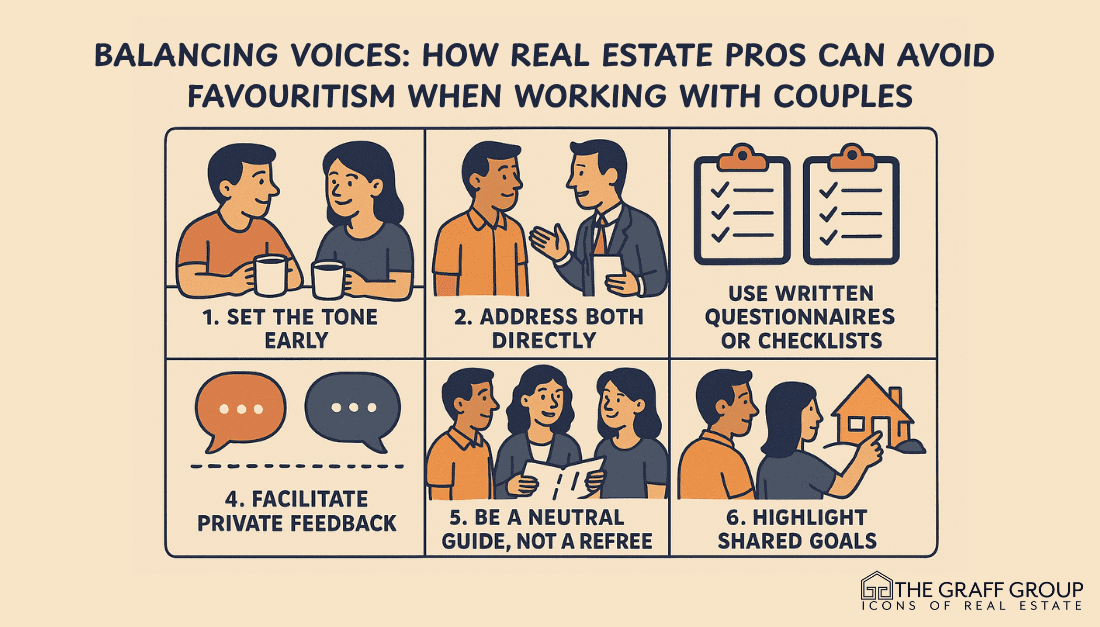
Strategies for Keeping Balance

1. Set the Tone Early

From the first consultation, make it clear that you want input from both spouses. Ask each to describe their top priorities in a home and note them down. This shows that their perspectives are equally important and will be considered in the search.

2. Address Both Partners Directly

Maintain eye contact and direct questions evenly.
If one partner dominates, redirect gently: “That’s a great point. How do you feel about that, [partner’s name]?”
This encourages the quieter spouse to share without putting them on the spot.

3. Use Written Questionnaires or Checklists

Provide each partner with their own copy of a needs-and-wants checklist. When completed separately, it ensures that both perspectives surface and can highlight areas of alignment or reveal differences that need to be discussed together.

4. Facilitate Private Feedback

After showings, ask each spouse individually what they thought of the home. Sometimes the quieter partner will open up more when not feeling overshadowed. Even a brief one-on-one phone call can provide valuable insights.

5. Be a Neutral Guide, Not a Referee

If the couple disagrees, avoid taking sides. Instead, acknowledge both views and help them explore compromises. Your role is to keep the decision-making process collaborative, not competitive.

6. Highlight Shared Goals

Bring the conversation back to common priorities the couple identified at the outset like location, budget, or size. This helps unify their perspectives and keeps discussions constructive.

The Payoff

Couples who feel equally represented are more confident in their decision and more appreciative of their agent. By ensuring both voices are heard, real estate professionals not only protect the transaction but also build stronger long-term relationships, the kind that lead to referrals and repeat business.

Let’s get in touch! If you or someone you know is thinking about buying, reach out. We’d love to help guide your journey so everyone feels heard.

The Graff Group Toronto: Icons of Real Estate
Samantha Graff Benmor & Cheryl Graff
Experience. Empathy. Results.

Leave a Reply

Balancing Voices: How Real Estate Pros Can Avoid Favouritism When Working With Couples

Balancing Voices: How Real Estate Pros Can Avoid Favouritism When Working With Couples

When helping a married couple search for a home, real estate professionals often face a familiar dynamic: one partner takes the lead in conversation, while the other remains quieter in the background. While it may feel natural to direct most of the dialogue toward the more vocal spouse, doing so can unintentionally alienate the quieter partner — and potentially create tension down the road. Successful agents know that both parties need to feel equally heard, respected, and represented throughout the process.

Why Equal Attention Matters

Buying a home is one of the largest financial and emotional decisions a couple makes together. If one partner feels ignored, it can lead to frustration, second-guessing, or even derail a deal. Beyond protecting the transaction, making space for both voices strengthens trust and demonstrates professionalism.

Strategies for Keeping Balance

1. Set the Tone Early

From the first consultation, make it clear that you want input from both spouses. Ask each to describe their top priorities in a home and note them down. This shows that their perspectives are equally important and will be considered in the search.

2. Address Both Partners Directly

Maintain eye contact and direct questions evenly.
If one partner dominates, redirect gently: “That’s a great point. How do you feel about that, [partner’s name]?”
This encourages the quieter spouse to share without putting them on the spot.

3. Use Written Questionnaires or Checklists

Provide each partner with their own copy of a needs-and-wants checklist. When completed separately, it ensures that both perspectives surface and can highlight areas of alignment or reveal differences that need to be discussed together.

4. Facilitate Private Feedback

After showings, ask each spouse individually what they thought of the home. Sometimes the quieter partner will open up more when not feeling overshadowed. Even a brief one-on-one phone call can provide valuable insights.

5. Be a Neutral Guide, Not a Referee

If the couple disagrees, avoid taking sides. Instead, acknowledge both views and help them explore compromises. Your role is to keep the decision-making process collaborative, not competitive.

6. Highlight Shared Goals

Bring the conversation back to common priorities the couple identified at the outset like location, budget, or size. This helps unify their perspectives and keeps discussions constructive.

The Payoff

Couples who feel equally represented are more confident in their decision and more appreciative of their agent. By ensuring both voices are heard, real estate professionals not only protect the transaction but also build stronger long-term relationships, the kind that lead to referrals and repeat business.

Let’s get in touch! If you or someone you know is thinking about buying, reach out. We’d love to help guide your journey so everyone feels heard.

The Graff Group Toronto: Icons of Real Estate
Samantha Graff Benmor & Cheryl Graff
Experience. Empathy. Results.

Leave a Reply